The Spanish alphabet, a fundamental tool in communication, consists of 27 letters: 26 of them are taken from the Latin alphabet, while the 27th is the 'ñ'. This unique letter plays a vital role in the Spanish language, especially in offering a distinct identity to Spanish, differentiating it from other Romance languages.
Spelling out the Spanish alphabet from 'a' to 'z' is simple, but mastering the intricacies, such as when to use the 'ñ', presents a fascinating challenge for Spanish learners. Let's delve into the structure and history of the Spanish alphabet, along with the unique features that set it apart.
History and Evolution of the Spanish Alphabet
The Spanish alphabet began as a phonetic system, closely aligning with the spoken language. It has evolved over centuries, mirroring the transitions in Spanish phonetics, grammar, and regional influences.


During the centuries following the fall of the Western Roman Empire, the Latin alphabet underwent various transformations. The Spanish alphabet, as we know it today, began to take shape during the Visigothic period in the Iberian Peninsula. The Moors' subsequent invasion brought additional modifications, leading to the formation of the Spanish language and its unique alphabet.
Distinct Features: The Digraph 'ch' and 'll'
The Spanish alphabet features three digraphs (two-letter combinations): 'ch', 'll', and 'rr'. The 'ch' is a unique sound not present in English, resembling the Scottish 'ch' in 'loch'. It's crucial for Spanish learners to distinguish between 'c' as in 'car' (/k/) and 'ch' as in 'cheetah' (/ʧ/).


Similarly, 'll' and 'rr' represent distinct sounds. The 'll' signifies a velar lateral approximant, often represented as /ʝ/ or /ʎ/, similar to the 'y' sound in 'yoga'. 'rr', on the other hand, is a rolled r (trilled r), requiring precise tongue action. These sounds are challenging for English speakers, emphasizing the importance of hearing and practicing these sounds.
The 'ñ' - Protector and Identifier of Spanish
The 'ñ' is unique to the Spanish alphabet, often hailed as its guardian and identifier. It evolved from a 'n' with a tilde (~), representing a palatal nasal consonant (/ɲ/). The tilde eventually became a diaeresis (¨), resulting in the 'ñ' we use today.
Losing the 'ñ' would significantly alter the Spanish language, potentially making it indistinguishable from other Romance languages. For instance, in Argentinian Spanish, the 'll' and 'y' have merged, influencing the language's rhythm and character. Thus, the 'ñ' serves as a powerful symbol of Spanish unity and distinctiveness.
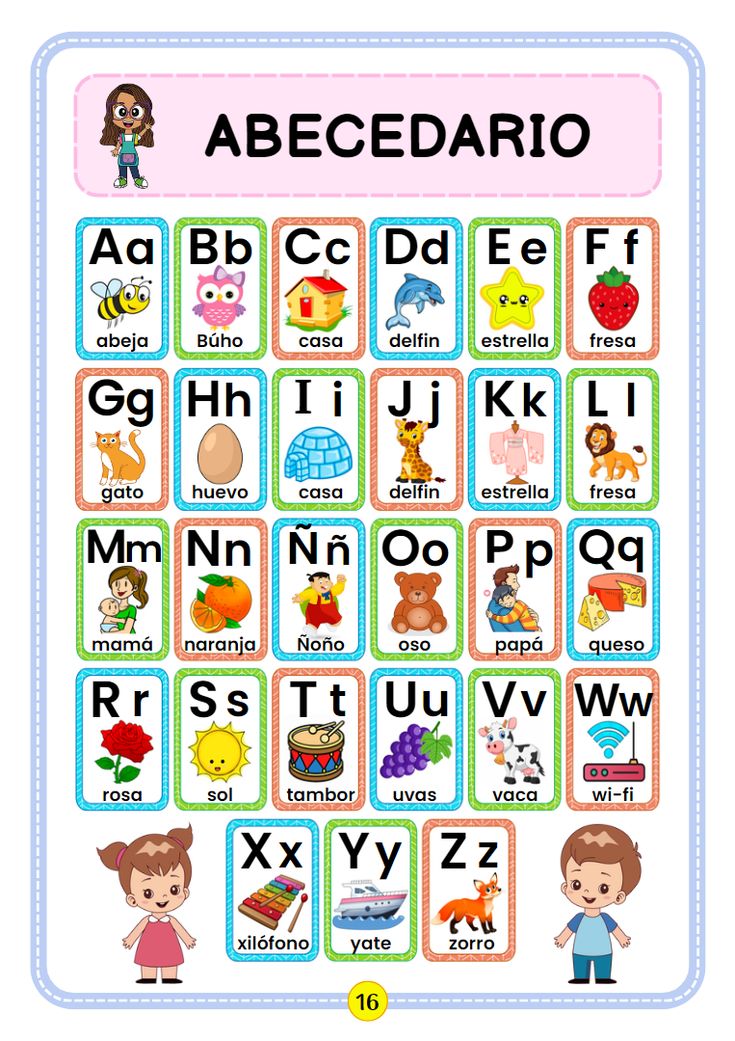


Incorporating the Spanish Alphabet in Learning
Learning the Spanish alphabet is the initial step towards mastering Spanish. Exposure to alphabetic principles, sound-letter correspondences, and spelling patterns builds a strong foundation for reading and writing fluency.
For English speakers, common challenges arise from the inconsistent mapping of sounds and letters in Spanish. Nevertheless, with pratica, patience, and understanding of the Spanish language's unique features, these hurdles can be overcome.
Phonics and Reading in Spanish
The Spanish language employs phonics heavily, meaning that each letter or combination of letters is assigned a unique sound. This consistency simplifies learning to read and write Spanish significantly. Moreover, words are typically separated by spaces, further aiding reading development.


Spelling and pronunciation rules often differ between languages. For instance, 'g' before 'e' or 'i' in Spanish sounds like /x/ (as in Scotch 'loch'), unlike the /g/ in English. Similarly, the 'b' and 'v' sounds are pronounced alike, necessitating context-dependent interpretation for clarity. Understanding these distinctions makes Spanish spelling and pronunciation more predictable.
Expand Vocabulary and Improve Reading Skills
To build a strong vocabulary in Spanish, start by learning syllables and high-frequency words. Familiarize yourself with common word patterns and affixes. Spanish word roots often share connections with English, making learning manageable and engaging.
Improving your reading skills involves consistently practicing your newfound vocabulary. Read Spanish books, newspapers, or online content to enhance your fluency. Engage with diverse materials, from children's stories to news articles, to expose yourself to varied vocabulary and sentence structures.
Embarking on the journey of learning the Spanish alphabet and language is an exciting adventure. By exploring its rich history, unique features, and practical applications, you'll soon find yourself conversing in Spanish with ease and confidence.