Welcome to the fascinating intersection of image and technology. In today's digital age, the two are almost inseparable, with technology advancing the way we capture, edit, and share images, while images themselves are becoming more intricate and immersive. Let's delve into this dynamic alliance and explore its far-reaching impacts.
The marriage of image and technology began in the mid-19th century with the invention of the photograph, a process that relies on technology to capture and preserve moments. Since then, the relationship between image and technology has only grown stronger, reshaping the way we perceive, interact with, and engage with visual content.
Revolution in Image Capture
One of the most significant advancements in the image and technology landscape is the evolution of camera technology. From the aha! moment of the first digital camera, developed by Steven Sasson at Eastman Kodak in 1975, to the high-resolution, smartphone-automated cameras of today, the capability to capture images has expanded beyond physical cameras.


Today, the average smartphone packs more imaging power than the early models of Bainbridge, the multi-million-dollar supercomputer that landed astronauts on the moon. Smartphone cameras can record videos in 4K resolution, capture photos in ultra-wide-angle, and boast advanced features like night mode and portrait mode.
Camera Technology Advancements
Underlying these advancements is a potent mix of technologies. For instance, advanced hardware like sensors, lenses, and image signal processors (ISPs) work in tandem with complex software algorithms to deliver stunning images.


Machine learning has also made significant strides in camera technology. AI-powered cameras can now identify and focus on subjects, automatically adjust settings, and even recognize scenes to suggest shooting modes. This is not limited to standalone cameras; even smartphones like the Google Pixel 4 and the iPhone 12 leverage AI for computational photography.
Beyond CCD and CMOS
The future of image capture technology is already here. Companies like Light and Leica are exploring multi-camera arrays and tuneable lenses, while Canon has developed a powerful, high-sensitivity sensor that promises to revolutionize low-light photography.
Meanwhile, the race to develop next-generation sensors continues. Gallium Arsenide and newly emerging technologies like wafer-scale chinch camera components promise faster shutter speeds, greater sensitivity, and higher pixel counts, paving the way for even more advanced image capture technology.


Meaningful Manipulation: Image Editing Technology
Advancements in technology have not only improved our ability to capture images but also our capability to edit and manipulate them. From the era of darkrooms and films to today's digital photo editors, the evolution of image editing technology has transformed the way we interact with and perceive visual content.
Software like Adobe Photoshop and Lightroom have become industry standards, offering a suite of tools to edit, enhance, and manipulate images. But the technology behind these software is not the only player. Machine learning and AI algorithms are making editing tasks easier and more intuitive.
AI-Driven Editing
AI can automatically select sky and foreground subjects, offering suggestions for lens corrections, lighting, composition, and colors. It can also create realistic clones and remove unwanted elements from the image. Tools like Skylum's Luminar AI and Topaz Laboratories' Mask AI leverage AI for surreal and naturalistic edits.



Moreover, AI-enhanced editing is extending beyond photography. In film and animation, AI can assists in predictive pathing, edge-detection, and rotoscoping, automating repetitive tasks and allowing for more refined, realistic end-results.
Progressive Image Manipulation
The horizon for image manipulation technology is expansive. Companies like DeepArt.io and DeepDreamGenerator are exploring deep learning to transform images in surreal and artistic ways, while NVIDIA's StyleGAN technology is creating new classes of images.
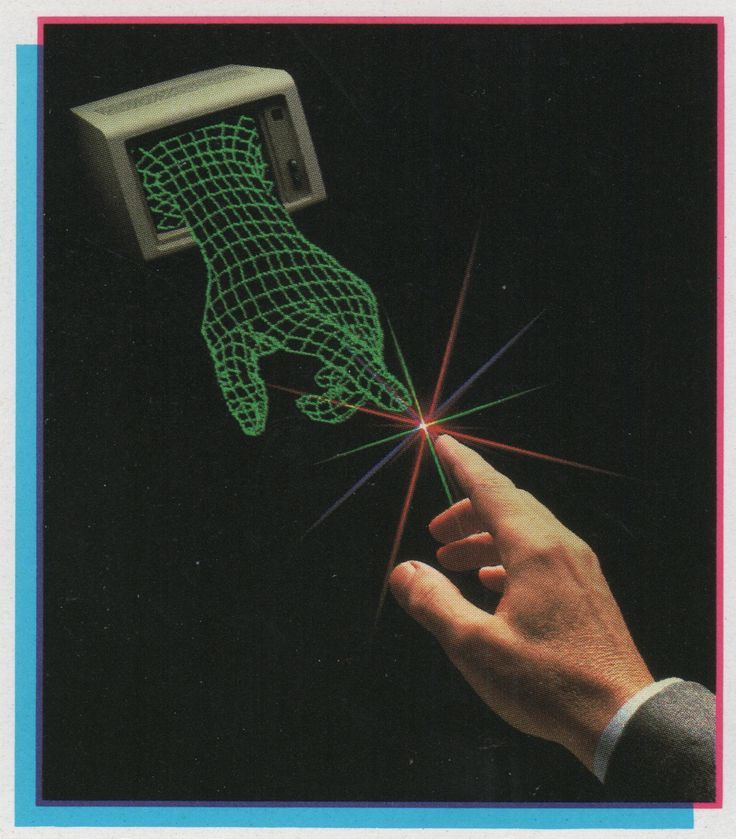
Meanwhile, the development of 3D and augmented reality (AR) technologies is opening up new frontiers in image manipulation and enhancement, offering immersive, interactive experiences.
Image Technology Beyond the Frame
Beyond capture and editing, technology is also transforming the way we share, experience, and interact with images, particularly with the advent of social media platforms, cloud storage, and augmented reality (AR) technologies.
Social media has turned image sharing into a global phenomenon. Today, over 3.2 billion images are shared daily across platforms like Facebook (350 million), Instagram (95 million), and WhatsApp (1 billion). These images are not just static photographs but dynamic digital artifacts, capable of being liked, reshared, and commented on, fostering global conversations and communities.
Cloud Storage & Image Sharing
Additionally, the explosion in cloud storage technologies has made image sharing more efficient. Companies like Google Photos, Amazon Prime Photos, and iCloud offer seamless syncing and instant access to millions of photographs, even remotely on connected devices.
Moreover, AR technologies are facilitating a new way of image interaction. Augmented reality allows for immersive experiences, overlaying digital images and information onto the real world. This technology is being used in various industries, from retail and education to real estate and gaming, transforming image technology into a multimodal, multisensory medium.
The Future of Image and Technology
Looking ahead, the landscape of image technology will be shaped by advancements in artificial intelligence, machine learning, virtual reality and augmented reality, and, undoubtedly, new technologies we've not yet envisioned. As we hurtle towards an era of smart cities and Industry 4.0, the possibilities for image and technology are limitless.
Imagine streets filled with AR-enabled billboards, cars driving themselves to destinations suggested by an intelligent, AI-driven image processing system, or smart cities using AI to interpret the meaning behind a traffic congestion photograph shared on social media. This is not far-fetched; these are real possibilities, just around the corner. So buckle up: the future of image and technology promises to be an exciting ride.