In the dynamic world of business, two crucial yet distinct concepts garnish much attention: Brand Equity and Customer Equity. Both are intangible assets that drive a company's success, but they differ in focus and measure. Let's dive into these two realms, exploring their significance, components, and how they intertwine to create a robust business strategy.
Understanding Brand Equity vs. Customer Equity is like considering two sides of the same coin. Brands strive for strong equity to attract customers, while customer equity, in turn, boosts brand equity. Both aspects are vital, but they cater to different aspects of a business, affecting its performance and longevity in unique ways.
Brand Equity
Brand Equity represents the added value a brand brings to products or services compared to unbranded or generic alternatives. It's the brand's price-lifting power, derived from consumers' perceptions, experiences, and emotions tied to the brand. This intangible asset can be a significant competitive advantage.


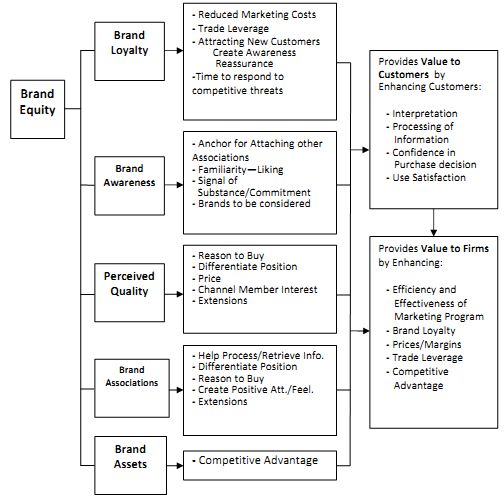
Marketers invest heavily in building and maintaining brand equity, as it reduces marketing costs, attracts customers, and commands a price premium. A strong brand can withstand market fluctuations better than a weak one, protecting the business during downturns.
Brand Awareness
Brand Awareness, the first pillar of brand equity, refers to the degree to which consumers are familiar with a brand. Recognizable brands evoke memories and associations, making it easier for customers to choose a product or service in a crowded market. Awareness can be measured qualitatively (brand recall) or quantitatively (top-of-mind awareness).


Let's consider Coca-Cola. With strong brand recall, consumers effortlessly recognize Coke in various contexts, making it a go-to choice for a refreshing drink, regardless of locale.
Brand Association & Perception
Brand Association and Perception, the second pillar, comprises consumers' thoughts, feelings, and experiences linked to a brand. These associations create brand imagery that dictates whether a brand is charted in a positive, negative, or neutral light. Walking down a street, gazing at billboards, or overhearing conversations, we're constantly associating brands with specific attributes, which shape our perceptions.
Take Apple, for instance. For many, it's a symbol of innovation, premium quality, and sleek design. These positive associations fuel its brand equity, even as the tech space continually evolves.


Customer Equity
Customer Equity, on the other hand, centers on a company's customer base. It aggregates the total value of a firm's current and prospective customers, considering customer acquisition costs, retention, loyalty, and advocacy. While Brand Equity attracts customers, Customer Equity focuses on maximizing the value derived from that customer base.
Gauging Customer Equity enables businesses to pinpoint high-value customers, target marketing efforts effectively, and foster loyal customers who drive sustainable growth through repeat purchases and referrals.
Customer Lifetime Value
Customer Lifetime Value (CLV), the first sub-pillar, estimates the total revenue a business can reasonably expect from a single customer over their customer lifetime. CLV considers initial acquisition costs and ongoing customer-related expenses, providing a crystal-clear view of a customer's financial worth.


Understanding CLV enables businesses to invest wisely in customer retention, as Walmart has consistently done, offering omnichannel experiences, discounts, and customer-friendly policies to keep its customer base flourishing.
Customer Satisfaction & Loyalty
Customer Satisfaction and Loyalty, the second sub-pillar, encompasses customers' contentment with products, services, and overall experiences, paving the way for lasting relationships. Happy customers tend to spend more, remain with the brand longer, and recommend it to others.
Amazon is a prime example of leveraging customer satisfaction and loyalty. Through continuous innovation, exceptional service, and personalization, it consistently delights customers, boosting equity and fostering brand advocacy.
In the grand chessboard of business strategy, Brand Equity and Customer Equity serve as critical pieces, each with unique strengths and complementary roles. Balancing brand investment with customer-centric initiatives creates a powerful synergy that propels businesses forward.continually refining these areas ensures sustainability and a competitive edge in the ever-changing market landscape. So, as you contemplate your business moves, ask: Are you optimizing both your brand and customer equity?