The Allegory of the Cave, a philosophical thought experiment, is a mind-provoking tale from Plato's masterpiece, The Republic. It offers a profound insight into our understanding of reality, perception, and knowledge. Yet, it's often shrouded in philosophical jargon, making it daunting for beginners. So, let's embark on a journey to demystify this allegory in a way that's easy to grasp, without compromising its depth.
Imagine you're in a vast, underground cavity. You and other captives have been there since birth, facing a blank wall. Behind you, an unseen fire glows. Between the fire and the prisoners, a raised pathway is constructed, concealed by a wall. Puppeteers on the path manipulate an assortment of artifacts—statues, dolls, and other objects—over the wall, casting shadows onto the wall you face. These shadows are the only reality you and your fellow captives have ever known.
The Captives' Preconceived Reality
For the cave dwellers, these shadows represent their 'reality'. They've learned to recognize certain shadows and associate them with specific 'things'. They've created a complete system of 'knowledge' based solely on these projections, unaware of their true nature.


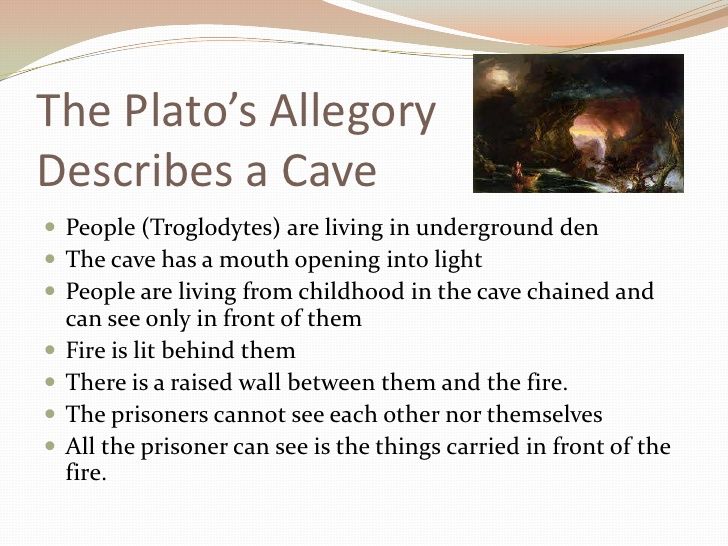
This scenario isn't as far-fetched as it seems. It mirrors our daily lives. We often base our understanding of the world on preconceived notions, assumptions, and prejudices, without realizing these 'truths' are mere shadows of the real world.
Captive A: The Reluctant Explorer
One day, a captive is freed and forced to leave their familiar surroundings. They're led out of the cave, towards the sunlight. The transition is harsh; the sun blinds them, and they struggle to see the objects it illuminates. They protest,-α1.aiśing the harsh, new reality is better than the comforting shadows they knew.


This predicament echoes our resistance to change. We often prefer comforting illusions to the harsh reality, even when we know the former is flawed. But by not embracing the truth, we remain prisoner to our own ignorance.
Captive B: The Converted Philosopher
Over time, the freed captive's eyes adjust to the light. They begin to see the true forms of the objects cast by the sun. This new reality is unfamiliar, complex, and even alarming. But it's genuine, offering a clearer understanding of the world.
This phase symbolizes the journey of a philosopher—one who questions, seeks truth, and embraces difficult realities. They realize the 'world' they once knew was a distorted, random dance of shadows, not reality.


Descending into the Cave
Armed with this newfound understanding, our converted philosopher returns to the cave. They're eager to share their discovery with their fellow captives, expecting them to embrace the truth enthusiastically.
Instead, they're met with ridicule. The captives, who've never left their familiar shadows, consider this 'new' reality to be delusional. They don't just reject the philosopher's claims; they threaten their life, blinded by their comforting, yet false, reality.
The Philosopher's Burden
This final chapter unveils the challenging life of a philosopher. It's easier to accept comforting lies than embrace harsh truths. The philosopher's duty, however, is to seek and share truth, even in the face of hostility. It's a task that's as vital as it is arduous.


Hence, the Allegory of the Cave challenges us to question our perceptions, embrace reality, and strive for truth—even when it's uncomfortable or hard to grasp. It reminds us that 'reality' isn't always what it seems, and the shadows we see might just be mere illusions.
So, keep questioning, keep seeking. The cave awaits, and reality doesn't always knock at the first entrance you find. Happy exploring!